Ever wonder where names like Alfred or Edith actually come from? Long before baby name apps existed, Anglo-Saxon parents were already picking names that carried real weight, built from words for wolves, kings, peace, and battle glory. These Anglo-Saxon names feel ancient and fresh at the same time, which is exactly why so many parents, writers, and history lovers still reach for them today.
Here you’ll find 50 real Old English names with meanings, split into general picks, boy names, and girl names, plus tips on picking one that fits your family or your next character.
What Are Anglo-Saxon Names?
Anglo-Saxon names come from Old English, the language spoken in England roughly between the 5th and 11th centuries. Most were built by joining two meaningful word parts together, so a name wasn’t just a label. It was basically a tiny sentence about who you hoped to become.
Take a name like Oswald. Break it apart and you get “os” (god) plus “weald” (power), giving you something close to “power of god.” Parents picked these combos on purpose, hoping the meaning would rub off on the kid wearing it.
Some name parts showed up again and again because they were seen as lucky or strong. Words for wolf, battle, bright, noble, and peace pop up across dozens of names, boy and girl versions alike, which is why you’ll notice patterns as you scroll through this list.
This naming style stuck around even after 1066, when Norman French names started crowding the baby name pool. A handful of Anglo-Saxon picks like Edward and Edith survived anyway, and they’re still going strong centuries later. 🙂
A Quick Look at Anglo-Saxon Naming Traditions
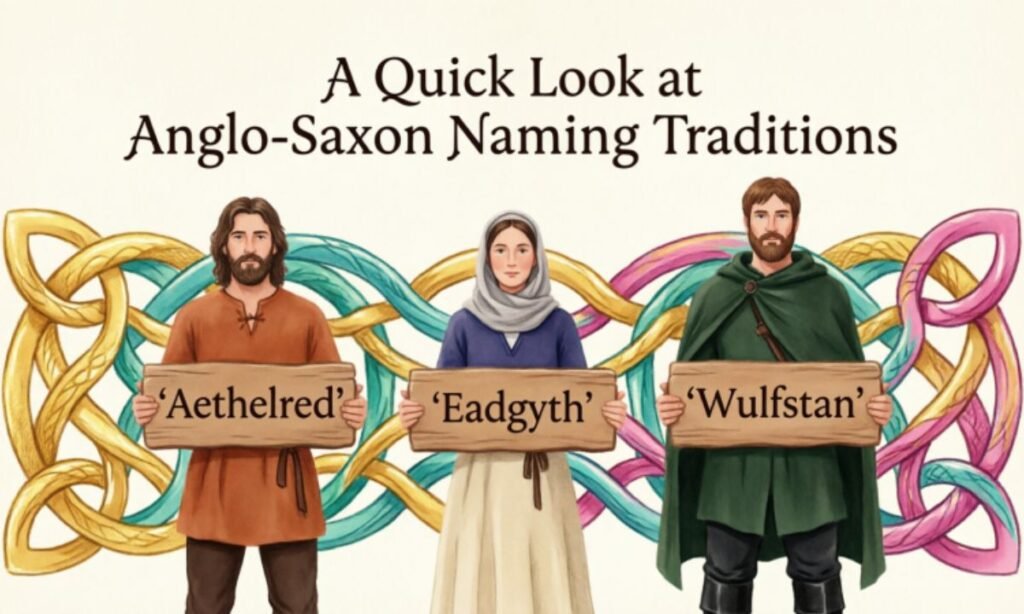
Naming a baby in Anglo-Saxon England wasn’t random. Families often reused name parts from grandparents or parents, mixing and matching syllables to create something new but still tied to the family line.
A dad named Aldwin might name his son Aldric, keeping the “Ald” (old, wise) part alive while swapping the ending. This pattern, sometimes called name-linking, is one reason so many Old English names sound like cousins of each other.
Status mattered too. Royal families leaned on names built from “aethel” (noble), like Aethelred and Aethelflaed, to signal rank right from birth. Regular folks used simpler combos, but the same building-block idea applied across every class.
Old English scribes recorded these names in early documents like the Anglo-Saxon Chronicle, which is actually how so many of these names survived for us to use hundreds of years later.
ALSO READ MORE:http://thetophexas.com/powerful-names/
Anglo-Saxon Names With Meanings
These 25 picks work across the board and cover kings, warriors, and a few underrated gems worth reviving.
● Alfred: “elf counsel.” One of England’s most famous kings carried this name, and it still sounds sharp and trustworthy today.
● Edward: “wealthy guardian.” Three English kings named Edward helped keep this one alive for over a thousand years.
● Oswald: “power of god.” A name that sounds strong without trying too hard.
● Harold: “army ruler.” Belonged to the last Anglo-Saxon king of England before 1066.
● Godwin: “friend of god.” A quiet, warm meaning that still works well outside religious families.
● Dunstan: “dark stone hill.” Named after a famous Anglo-Saxon saint and advisor to kings.
● Egbert: “bright edge,” like a polished sword blade. Belonged to an early king of Wessex.
● Wilfred: “desire for peace.” A gentle meaning wrapped in a strong sounding name.
● Cuthbert: “famous and bright.” Another saint’s name that aged surprisingly well.
● Bertram: “bright raven.” Ravens were seen as clever, watchful birds in Old English culture.
● Baldwin: “bold friend.” Simple, warm, and easy to shorten to Baldy or Win.
● Edmund: “wealthy protector.” Carried by an English king later honored as a saint.
● Osmond: “protection of god.” A quiet strength runs through this one.
● Winston: “joy stone” or “friend’s settlement.” Familiar thanks to a certain wartime prime minister.
● Ethelbert: “noble and bright.” One of the earliest recorded English kings wore this name.
● Hereward: “army guardian.” Linked to Hereward the Wake, a famous Anglo-Saxon rebel leader.
● Leofric: “dear ruler.” A name that sounds affectionate and commanding at once.
● Aldous: “old and wise.” Short, punchy, and easy on the ear.
● Osric: “god’s ruler.” A regal sound without feeling overused.
● Wulfstan: “wolf stone.” A fierce, protective meaning packed into two syllables.
● Aldwin: “old friend.” Cozy meaning, sturdy sound.
● Cynric: “royal ruler.” Belonged to an early king of Wessex.
● Redmond: “counsel protector.” A soft blend of wisdom and safety.
● Seward: “victory guardian.” Sounds fresh but has genuine Old English roots.
● Cynewulf: “kin wolf.” A loyal protector name with real bite to it.
Anglo-Saxon Boy Names
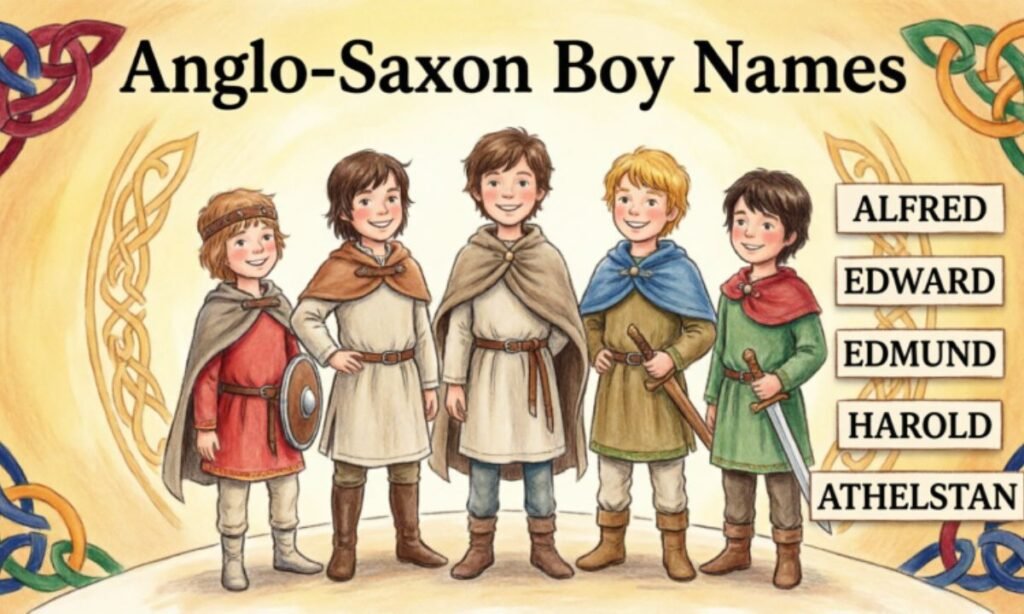
These 13 lean more traditionally masculine, heavy on battle and rulership themes.
● Athelstan: “noble stone.” Belonged to the first king to rule a fully united England.
● Eadric: “wealthy ruler.” A confident, grounded choice.
● Godric: “god’s ruler.” Strong without sounding harsh.
● Wulfric: “wolf ruler.” A name built for a kid who leads the pack.
● Beorn: “warrior” or “bear.” Short, punchy, and easy to say anywhere.
● Cedric: “battle chieftain.” Popularized later in literature but rooted in Old English sound patterns.
● Osgar: “god’s spear.” A sharp, protective meaning.
● Aldric: “old ruler.” Wise beyond its years, literally.
● Cenwulf: “brave wolf.” Belonged to an early king of Mercia.
● Frithuric: “peace ruler.” A rare pick that stands out instantly.
● Wystan: “battle stone.” Solid, unshakeable feeling name.
● Osbert: “divine bright.” Clean and easy to shorten to Ozzy.
● Aethelred: “noble counsel.” Famous, for better or worse, thanks to Aethelred the Unready.
Anglo-Saxon Girl Names
These 12 carry meanings around strength, peace, and nobility, and several are due for a comeback.
● Edith: “prosperous in war.” Balances toughness with old-world elegance.
● Alfreda: “elf counsel.” The feminine twin of Alfred.
● Audrey: from Aethelthryth, “noble strength.” One of the few Anglo-Saxon names that never went out of style.
● Winifred: “peace and joy.” A warm, hopeful meaning.
● Mildred: “gentle strength.” Soft sound, sturdy meaning underneath.
● Hilda: “battle woman.” Short, bold, and easy to say.
● Godiva: “gift of god.” Best known from the Lady Godiva legend.
● Rowena: “fame and joy.” A name with a fairy tale feel.
● Bertha: “bright, famous.” Once hugely popular, now feels fresh again.
● Emma: “whole” or “universal.” Widely used in Anglo-Saxon England through royal marriages.
● Wynne: “joy.” Tiny, sweet, and works well as a nickname too.
● Editha: variant of Edith, “prosperous war.” A softer twist on a classic.
Are Anglo-Saxon Names Still Used Today?
Short answer, yes, plenty of these names never actually left. Edward, Alfred, Edith, and Emma show up on birth certificates every single year, often without parents realizing how old the name really is.
Baby name trends move in cycles, and Old English names are having a real moment again. Parents want something that sounds classic but isn’t as common as James or Emma Rose, and names like Winifred or Osric fit that gap nicely.
Fantasy books, shows, and games have also brought these names back into daily conversation. A lot of viewers hear a name like Cedric or Hilda on screen and go looking it up, then realize it has real history behind it, not just a made up fantasy feel.
Genealogy sites have played a part too. As more people trace their family trees back centuries, they’re rediscovering these names in old parish records and bringing them back for their own kids as a nod to that history.
How to Choose the Right Anglo-Saxon Name
Start with the meaning, not just the sound. If you want a name that signals strength, look at wolf and battle based names like Wulfric or Hilda. If peace and warmth matter more, Wilfred or Winifred fit better.
Say the name out loud with your last name a few times. Some Old English names, like Aethelred or Frithuric, sound great on their own but get clunky with certain surnames, so testing this early saves regret later.
Think about nicknames too. Osbert becomes Ozzy, Wulfstan can shorten to Stan, and Alfreda works fine as Freda or Allie. A built in nickname option gives your kid flexibility as they grow.
If you’re naming a character instead of a baby, match the name to the personality. Save the harsher, battle heavy names for warriors and leaders, and save the softer picks like Wynne or Godwin for gentler characters.
Tips to Make an Old English Name Easier to Use Today
A lot of these names look intimidating on paper but are simple once you break them down. Say Cynewulf as “KIN-eh-wulf” and it stops feeling scary fast.
You can also soften an old spelling for everyday use. Aethelred can become Ethelred, and Cyneric can turn into Kenrick, keeping the sound and meaning while making it easier for teachers and coworkers to read.
Adding an easy, familiar middle name is another simple fix. Pairing Wulfric with a plain middle name like James or Grace balances the old and new nicely.
If you’re building a group identity, like a book series or gaming clan, using a shared name pattern, such as everyone’s name ending in “ric” or “wine,” ties the group together the same way Anglo-Saxon families once linked their own names.
Final Thoughts
These 50 Anglo-Saxon names prove that old doesn’t mean outdated. Whether you want something regal like Athelstan, warm like Wynne, or fierce like Wulfstan, there’s a piece of Old English history in here that fits.
Which name from this list caught your eye? Drop a comment and let me know if you’re using one for a baby, a character, or just because you like the sound of it. 😊