
Ever scroll through a baby name list and feel like you have heard every single one before? You are not alone, and you are definitely not the only parent who has closed a naming app in mild boredom.
More UK parents are turning away from the same top ten charts and quietly picking something with a bit more soul. In this piece, you will find 50 genuinely rare baby names UK families are falling for right now, split neatly into girls, boys, and unisex picks, along with the real reasons behind this shift, plus a few honest tips to help you land on a name your whole family will love for years.
Rare Girl Names UK Parents Are Starting to Notice
Rare girl names carry a certain warmth that the popular ones sometimes lose. They feel personal, almost like a small secret shared between you and your daughter, and they rarely show up twice in the same classroom. Here is a proper list of unique baby girl names UK parents have been quietly reaching for, each with a little bit of the story behind it.
- Seraphina: soft and angelic, this one rarely appears on a school register, and it shortens beautifully to Sera for everyday use.
- Marigold: bright like the flower it borrows from, cheerful without trying too hard, and full of warmth for a summer baby.
- Wilhelmina: strong and old fashioned, with a lovely shortening to Minnie or Billie for a softer everyday feel.
- Cosima: Italian roots, meaning order and harmony, and it carries a quiet elegance that grows with a child.
- Romilly: has that classic English countryside feel, gentle on the ear, and pairs well with almost any surname.
- Clemency: means mercy, a name with genuine weight behind it, ideal for parents who want meaning built right in.
- Perpetua: bold and ancient, a name that stands its ground, tracing back to early Roman history.
- Ottoline: playful and a touch posh, hard to forget once heard, often shortened simply to Lottie.
- Rosalind: a Shakespearean pick, warm and graceful, still surprisingly uncommon on birth certificates today.
- Beatrix: think Beatrix Potter, cosy and full of character, with a gentle nod to storytelling.
- Cressida: mythical roots, graceful without being over the top, and unmistakably elegant when spoken aloud.
- Tamsin: short, sweet, and distinctly Cornish, carrying real regional charm for coastal families.
- Verity: means truth, refreshingly simple, and honest as both a word and a name.
- Islay: named after the Scottish island, calm and grounded, perfect for parents drawn to nature.
- Eulalia: means sweetly speaking, rhythmic and unusual, with a lovely musical quality when said out loud.
- Thomasina: a feminine twist on Thomas, quietly confident, and easy to soften into Tommy for daily life.
- Araminta: whimsical and vintage, often shortened to Minty, and full of old fashioned personality.
If you are drawn to the softer, storybook feel of names like Ottoline or Beatrix, it is worth exploring wider Edwardian and Victorian name registers too, since that era is where a huge number of today’s quietly rare girl names originally come from. Cornish and Celtic options like Tamsin and Islay also open up a whole family of related names worth exploring if regional heritage matters to your family.
Rare Boy Names UK Parents Are Starting to Notice
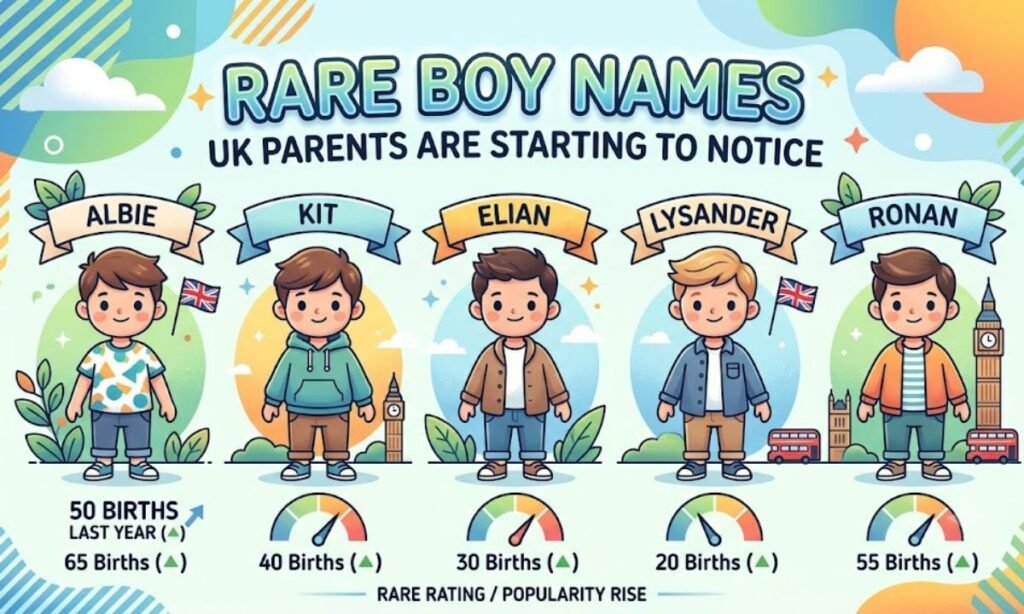
Boys names have leaned toward the same handful of choices for years, with the same five or six names cycling round every playground. These picks break that pattern while still feeling easy to say, easy to spell, and easy to grow into over time. Here is a solid batch of unusual boy names UK dads and mums are quietly bringing back into fashion.
- Casimir: regal and rhythmic, meaning proclaims peace, and it carries a confident sound from the very first syllable.
- Barnaby: warm and a little cheeky, impossible not to smile at, and it shortens easily to Barney.
- Cosmo: short, snappy, and full of quiet charm, sitting comfortably alongside longer sibling names.
- Rafferty: Irish roots, playful, and full of energy, a fun choice for a lively household.
- Peregrine: means traveller, bold and full of adventure, and shortens neatly to Perry for everyday use.
- Sylvester: strong and vintage, meaning of the forest, with a distinguished sound that ages well.
- Bartholomew: a proper old English classic, shortening nicely to Bart, with real depth of history behind it.
- Inigo: distinctive and a little dramatic, hard to mix up with anyone else in the room.
- Lysander: Greek roots, meaning liberator, poetic and strong, a name that carries real presence.
- Caspian: inspired by the sea, adventurous and calm at once, popular with parents who love travel.
- Torin: Gaelic, meaning chief, short and grounded, an easy name to spell and say.
- Wilfred: gentle and old fashioned, quietly making a comeback thanks to its warm, homely sound.
- Rufus: means red haired, friendly and easy to say, a name that suits a cheerful child.
- Ptolemy: ancient and scholarly, a name carrying genuine historical weight for curious families.
- Fergus: Scottish, meaning strong man, sturdy and warm, with a lovely regional feel.
- Silas: biblical roots, refreshingly simple, and steadily climbing in quiet popularity across the UK.
- Osric: old English, rare enough to turn heads gently without feeling like a hard sell.
Notice how many of these boy names, like Bartholomew and Peregrine, sound just as strong in their full form as they do in a shortened, everyday version. That flexibility matters more than people expect, since a child might prefer the shorter version at school and the full version later in life.
ALSO READ THIS:https://thetophexas.com/unique-unisex-middle-names-for-uk/
Rare Unisex Baby Names UK Parents Are Choosing
Unisex names give you flexibility and a genuinely current feel, without locking your child into a single narrow style. They also tend to age well, working just as nicely for a toddler as they do for an adult in a job interview. Here is a set of gender neutral baby names UK families are increasingly drawn to right now.
- Wren: a tiny bird, a tiny name, and a big personality packed into just one syllable.
- Bellamy: means beautiful friend, soft yet strong, and it flows nicely with most surnames.
- Wilder: free spirited, a name that feels like an outdoor adventure waiting to happen.
- Marlowe: literary, smooth, and quietly stylish, drawing gentle inspiration from classic playwrights.
- Sacha: gentle and international, working beautifully across different cultures and family backgrounds.
- Robin: a classic nature name, cheerful all year round, and comfortably familiar without feeling common.
- Emery: means brave and powerful, sitting nicely on any child regardless of style.
- Sorrel: herby and earthy, a name that feels grounded and connected to the outdoors.
- Blythe: means happy and carefree, exactly what it sounds like when spoken aloud.
- Rowan: a tree name, sturdy, calm, and genuinely timeless across generations.
- Indigo: colourful and creative, a name with real personality for an expressive family.
- Merritt: means worthy, understated and quietly confident, a name that ages gracefully.
- Arden: means eagle valley, nature rich and grounded, with a soft literary echo too.
- Percy: short for Percival, friendly and full of charm, easy to love straight away.
- Ellery: light and airy, a fresh pick that feels both new and timeless.
- Linden: a tree inspired name, calm, steady, and quietly lovely in everyday conversation.
Nature inspired picks like Wren, Sorrel, and Linden have grown steadily in popularity among UK parents who want a name that feels grounded rather than trend driven. If your family loves the outdoors, this whole category is worth browsing slowly, since so many of these names pair beautifully with more traditional middle names too.
Why Do These Baby Names Feel Rare in the UK?
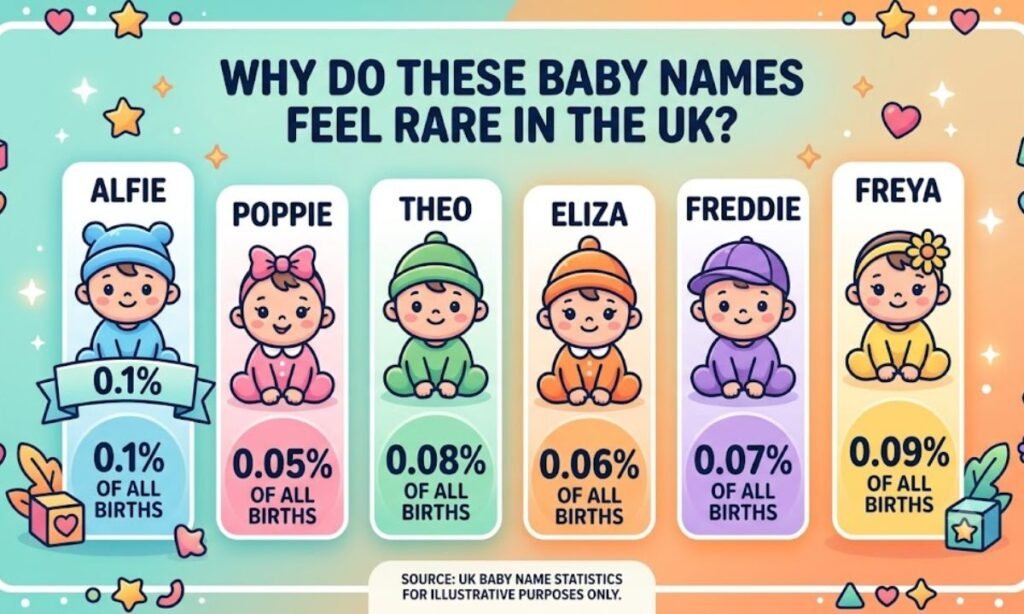
There is a real story behind why certain names feel rare while others seem to be absolutely everywhere. Baby naming in the UK often follows trends set by television, royal babies, sports stars, and social media, more than most parents realise at the time. When a name gets picked up by a popular show or a well known family, thousands of parents reach for it in the very same year, which quickly pushes it up the official ONS baby name charts. Names that stay off those lists usually come from smaller circles instead, such as family trees, regional dialects, or quiet personal meaning rather than mass trends.
Many of the vintage baby names UK parents are reviving today were common a century ago, then slowly faded out as fashions changed, and now they sound genuinely fresh again simply because nobody has heard them in years. Others come from Celtic, Cornish, or old English roots, which naturally keeps them rarer since they are tied to specific regions of the country rather than the nation as a whole. Geography plays a bigger part than most people expect, with certain names staying common in Scotland or Wales while barely appearing on English birth certificates at all. Family history plays a role too, since many parents are now naming babies after great grandparents whose names quietly skipped a generation or two along the way.
Choosing a rare name often means choosing something that will not fill a classroom register with four or five other children answering to it. It also gives your child a small built in conversation starter, since people tend to ask about an unusual name in a way they simply do not with a common one. For many parents, that is exactly the point, since a rare name feels like a genuine gift rather than something borrowed straight off a trending list.
Regional registry data across England, Scotland, and Wales also shows a slow but steady rise in exactly this kind of naming choice year after year. Rather than picking from a shrinking pool of ten or twenty repeated favourites, more parents are widening their search to family trees, old parish records, and even gravestones in search of something with genuine history attached. This shift is not about being different for the sake of it, it is about wanting a name that carries real weight and will not blend into a crowd of five identical name tags at nursery.
How To Test A Baby Name Before You Commit
Picking a name is a big decision, so give it a proper trial run before it goes anywhere near a birth certificate. A name might read beautifully on paper yet feel clunky the moment you actually say it out loud a dozen times, so testing early saves a lot of second guessing later.
- Say the full name out loud, first name, middle name, and surname all together, more than once.
- Shout it across a room, since that is exactly how you will be using it for the next eighteen years.
- Write it down and picture it on a birthday card, a school jumper, or a graduation certificate.
- Check how it shortens naturally, since nicknames tend to stick whether you plan for them or not.
- Say it alongside any sibling names you already have, so the set sounds balanced and connected.
- Search the initials it creates, just to rule out anything awkward before it becomes permanent.
Tips For Making A Rare Name Memorable
A rare name already stands out on its own, but a few small touches make it even more special for the long run. These little habits cost nothing, yet they help a rare name settle in comfortably rather than feeling like an odd choice to relatives who are used to more common options.
- Share the meaning behind the name with family early, so it becomes part of your child’s own story.
- Pick a name that is easy to spell out loud, since rare names can otherwise get misheard fairly often.
- Consider how the name pairs with your surname, checking the rhythm and flow together before deciding.
- Avoid overly complex spellings of an already rare name, since that combination can create a lifetime of correcting people.
- Introduce the name with confidence, since hesitation from parents often makes others question a name that is perfectly lovely.
Building A Sense Of Identity Around The Chosen Name
A name is not just a label, it slowly becomes part of how a child sees themselves as they grow. Rare names in particular tend to carry stronger personal stories, so it helps to actively build that identity rather than leaving it to chance.
- Tell the story behind the name at birthdays, turning it into a small family tradition each year.
- Let your child grow into the meaning, especially if it reflects a value like courage, peace, or joy.
- Celebrate the name’s origin, whether that is Celtic, Cornish, Scottish, or simply a treasured family favourite.
- Encourage your child to own their name proudly, rather than shortening it purely to fit in with others.
Personalisation Tips To Make The Name Truly Yours
Even a rare name can be made rarer still, and often more meaningful, with one or two small personal touches added along the way.
- Blend two family names together to create something rare yet deeply meaningful to your household.
- Use a place that matters to you, like where you got engaged, married, or simply grew up.
- Take inspiration from nature, a favourite book, or a piece of music you both genuinely love.
- Ask grandparents about older family names, since forgotten names often make wonderful rare picks today.
- Trust your gut feeling over trends, since the name you keep quietly returning to is usually the right one.
Final Thoughts
Choosing a rare baby name is really about choosing something that feels like your own, rather than borrowing whatever is trending this year. Bold, meaningful, and personal names like the fifty above give your child a story worth telling, rather than one shared with half their classroom.
Take your time with this decision, say the names out loud more than once, and notice which ones you keep coming back to naturally. That quiet pull toward one particular name is usually a good sign that you have found the right fit. Which name from this list caught your eye first? Drop it in the comments below, we would genuinely love to know.