
You just heard the name Leo somewhere. Maybe a friend’s new baby. Maybe the news, with a fresh pope taking that name. Maybe your own birthday falls in late July and someone called you “such a Leo.” This guide answers every question tied to the name Leo, from its Latin root to the fourteen popes who wore it, its place as a zodiac sign, and the famous faces who made it their own.
So, what does Leo actually mean?
Leo comes straight from Latin. The word simply means lion. No twist, no hidden layer, just the king of the animal kingdom packed into three letters. Ancient Romans used “leo” both as a regular word and as a personal name, which tells you something about how much they respected the animal. Strength, courage, and a bit of swagger got tied to this name from day one. That’s why parents still reach for it when they want something short but loaded with meaning. A name doesn’t need five syllables to carry weight. Leo proves that a single word can say “brave” without saying a thing more. The lion symbolism attached to this name has followed it through Roman history, medieval Europe, and straight into nurseries today. Even the coat of arms tradition leaned on lions for exactly this reason: power that doesn’t need explaining. Kings, knights, and city crests across Europe borrowed the lion image for centuries, and every time a family chose Leo as a name, they were quietly borrowing that same symbol for their child. It’s a name that skips the middleman. Where a lot of names need a backstory to explain their meaning, Leo just tells you outright. That directness is part of why it still sounds fresh and current even though the word itself is thousands of years old. A short, punchy sound paired with a bold meaning is a rare combination, and it’s a big reason the name keeps getting picked generation after generation. Compare it to names that need three or four syllables just to land the same feeling, and Leo starts to look like the sharper pick on the shelf, without losing an ounce of the meaning it’s carrying.
Is Leo a short version of Leonardo?
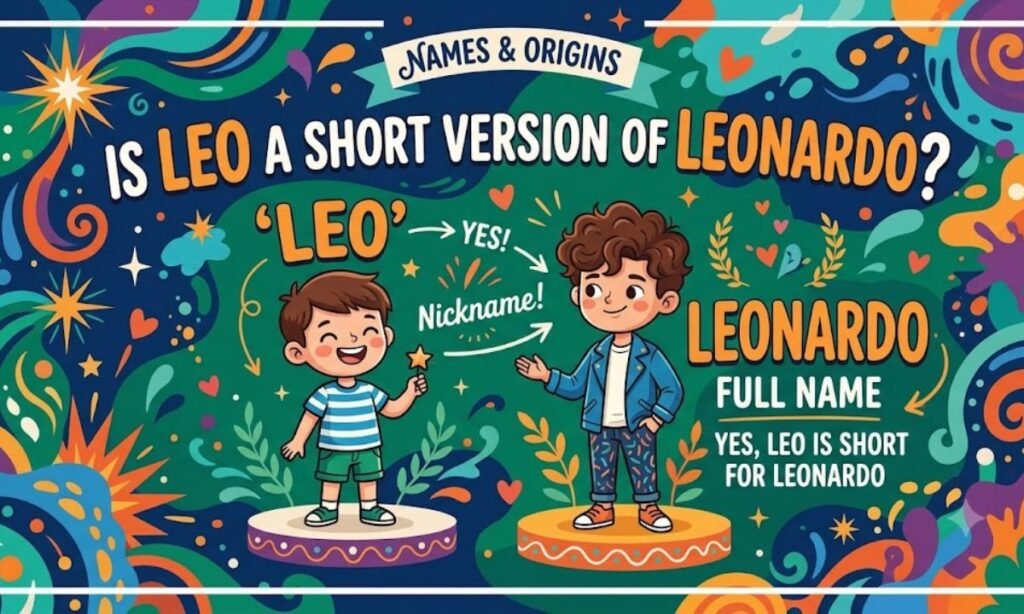
Sometimes, yes. In Italy, Spain, and parts of Latin America, Leo often works as the everyday nickname for Leonardo. Think of it the same way Alex stands in for Alexander. But here’s the twist most articles skip: Leo is also a complete, standalone name with its own Latin history that has nothing to do with Leonardo. Leonardo itself traces back to Germanic roots, blending words for “lion” and “brave” or “hardy,” so the two names share a theme even though they didn’t start from the same word. So when someone asks if Leo is “just short for Leonardo,” the honest answer is it can be, but it doesn’t have to be. Plenty of birth certificates say Leo and nothing else. No long form is hiding behind it. Parents pick Leo on its own merit all the time, drawn to how clean and confident it sounds without needing a longer name to back it up. There’s also a practical side to this choice worth mentioning. Some parents like giving a child a longer formal name for official documents while keeping a shorter everyday version for school and friends, and Leo slots into that plan neatly if Leonardo is the full name on the birth certificate. Others skip that entirely and register Leo as the complete, official name from day one, which avoids the “wait, what’s your real name” conversation later in life. Both routes work fine. It really comes down to whether your family wants that extra formal layer sitting behind the everyday name, or whether short and simple feels right on its own.
Is Leo a zodiac sign?
Yes, and this is where the name gets a second life outside the naming world. Leo is the fifth sign of the zodiac, covering birthdays roughly between July 23 and August 22. The symbol is, no surprise, a lion. People born under this sign get tagged with traits like confidence, warmth, a love of the spotlight, and a generous streak that shows up when friends need support. The sign sits under the rule of the Sun, which astrology fans say explains the big personality and the natural pull toward attention. Whether or not you buy into star signs, the overlap between the zodiac Leo and the name Leo isn’t a coincidence. Both trace back to the same Latin word for lion. That double meaning is part of why the name has stayed so recognizable across cultures. Say “Leo” to almost anyone and two images pop up at once: a baby name and a summer birthday. People who follow astrology closely often describe Leos as natural leaders, the kind of person who ends up organizing the group trip or giving the toast at a wedding without being asked twice. There’s also a softer side that gets mentioned less: loyalty. Astrology fans point out that Leos tend to fight hard for the people close to them, even if the confident exterior gets more attention. None of this changes the actual meaning of the name itself, since the name existed long before the zodiac attached its own personality traits to it, but it does add a fun layer for parents who enjoy that kind of detail when picking a name.
ALSO READ THIS:https://thetophexas.com/boyish-nicknames-for-girls-2/
How old is the name Leo?
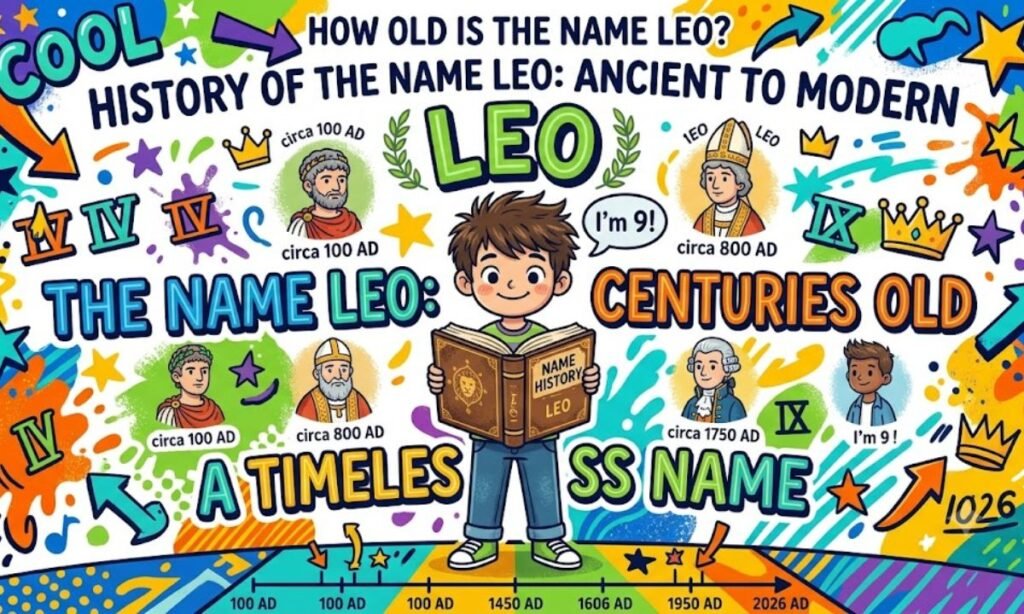
Older than most people guess. Records show Leo being used as a personal name in the Roman Empire, and it carried straight through into the early centuries of the Christian church. By the fifth century, it had already reached the highest office in the Catholic Church, worn by a pope. That’s not a name that got invented last decade for a baby name app. Jewish communities in medieval Europe also used Leo and its close cousin Leib (Yiddish for lion) as personal names, giving it a second cultural thread running alongside the Latin one. Centuries of steady use, dropping off here, rising there, but never disappearing, is rare for any name. Most trendy names fade within a generation or two. Leo has survived roughly two thousand years of naming fashion, wars, migrations, and language shifts, and it still lands in birth records every single day. Part of what kept it alive is how many different communities adopted it for their own reasons. Roman families used it for its meaning, early Christians carried it into church history through the popes, and Jewish families kept a parallel version alive through Leib. A name rarely survives that long by leaning on one culture alone. Leo managed to become useful and welcome in several traditions at once, which is exactly why it never really went quiet, even during centuries when it wasn’t topping any popularity chart.
How many popes have been called Leo?
Fourteen. The most recent one made headlines around the world. Pope Leo XIV, born Robert Francis Prevost in Chicago in 1955, was elected in May 2025, becoming the first American-born pope in the history of the Catholic Church. He spent over two decades doing missionary and pastoral work in Peru before later serving as bishop of Chiclayo, and he holds dual citizenship with the United States and Peru. Going back further, the very first Leo, Pope Leo I, earned the title “the Great” after he reportedly persuaded Attila the Hun to spare Rome from invasion in the fifth century. Leo III crowned Charlemagne as Holy Roman Emperor in the year 800, a moment that reshaped European history. Leo XIII, who reigned from 1878 to 1903, became known as the “Rosary Pope” and wrote extensively about workers’ rights, including his famous letter defending fair wages. Out of the fourteen, five have been declared saints. That’s a heavy legacy for one name to carry through so many centuries of church history. When a new pope steps out to greet the crowd for the first time, the name he picks is never random. Pope Leo XIV said his choice of name was shaped in part by Leo XIII and his work defending workers during the early days of industrial change, a detail that connects a nineteenth-century encyclical to a decision made in 2025. His very first public address, delivered in Italian and Spanish to a crowd estimated at around a hundred thousand people in St. Peter’s Square, spoke about building bridges and welcoming people in need of care. That kind of moment tends to put a name back in the spotlight overnight, and search interest in “Leo” as both a papal name and a baby name climbed noticeably in the months that followed his election.
Famous people called Leo
The name shows up across writing, sport, music, film, and invention, which says a lot about how flexible it is. It’s not tied to one industry or one era, which means the name never gets stuck feeling like a “footballer’s name” or an “actor’s name” the way some celebrity-linked names do. Here’s a spread of well-known real people who carried this name into different corners of history:
- Leo Tolstoy: the Russian novelist behind War and Peace and Anna Karenina
- Leo Messi: the nickname widely used for football icon Lionel Messi
- Leonardo DiCaprio: the Oscar-winning actor often called Leo by fans and friends
- Leo Varadkar: former Taoiseach (prime minister) of Ireland
- Leo Sayer: British singer-songwriter known for hits in the 1970s
- Leo Fender: founder of Fender, the guitar company behind some of the most recognizable electric guitars ever made
- Leo Baekeland: the chemist credited with inventing Bakelite, one of the first synthetic plastics
- Leo McKern: Australian actor best remembered for Rumpole of the Bailey
- Leo Woodall: British actor known for The White Lotus and One Day
- Leo Suter: British actor known for Victoria and Snow White and the Huntsman
- Leo Kottke: American fingerstyle guitarist with a devoted following
- Leo Durocher: American baseball player and manager, a Hall of Fame figure
- Leo Robin: American lyricist behind several golden-age Hollywood songs
- Leo Ryan: US Congressman remembered for his work investigating Jonestown
Notice how spread out this list is. Writers, athletes, actors, inventors, musicians. Very few names cross that many fields this comfortably.
How popular is Leo in the UK?

Leo has been on a genuine winning streak. In the 2024 England and Wales rankings published by the Office for National Statistics, Leo landed in the top five boys’ names, sitting right behind Muhammad, Noah, Oliver, and Arthur. That’s a serious jump from where the name sat a couple of decades ago, when it barely registered outside the top hundred. Parents across the UK have clearly warmed to the mix of short length, strong meaning, and easy pronunciation. It also travels well, working just as smoothly in England as it does across Europe, which makes it a practical pick for mixed-nationality families. Scotland’s own records show a similar pattern, with Leo consistently sitting near the top of the boys’ list year after year. A name doesn’t climb that high by accident. Parents are choosing it on purpose, again and again, and the trend shows no sign of slowing down.
Does Leo work in other languages?
Beautifully, and that’s part of its worldwide appeal.
- Léo: the French version, dropped straight into everyday use
- Leão: Portuguese, meaning lion, used both as a name and a word
- Leone: Italian, a fuller form that still nods to the same root
- Leonello: an Italian variant with a softer, more decorative sound
- Leonzio: another Italian branch, less common but still in use
- Lev: the Russian word and name for lion, carrying the same core meaning
- Leos: a Slavic variation found across parts of Eastern Europe
- Lio: the Hawaiian rendering, short and rhythmic
- Leonardo: the Spanish and Italian long form many treat as Leo’s big brother
A name that survives translation this cleanly tends to stick around. Parents raising bilingual kids often pick Leo for exactly this reason, since it barely changes shape from one language to the next. Say it in London, Lisbon, or Rome and people instantly recognize it. That kind of easy border-crossing is rare among short names, and it’s a real point in Leo’s favor for anyone planning a life or a family that spans more than one country. Grandparents in a second language, cousins abroad, a future move overseas: none of it forces a rethink of the name, because Leo already speaks the local dialect wherever you land.
What are the nicknames for Leo?
Leo itself works as a short form for a whole cluster of longer names, and it also picks up its own nicknames once it’s given. Names Leo commonly shortens:
- Leonard
- Leonardo
- Leon
- Leopold
- Leonidas
- Napoleon
- Leandro
- Leocadio
Nicknames people give to someone already named Leo:
- Lee
- Ley
- Leyo
- Leozinho (a warm Portuguese diminutive)
- Big Leo
- Leobear
That’s fourteen names in total sitting under one small word. Few names manage to be both a nickname magnet and a nickname source at the same time. Leo pulls off both without sounding cluttered.
So, is Leo a good name?
Here’s the honest answer: yes, and the reasons stack up quickly. It’s short, easy to spell, and doesn’t trip anyone up on the first try. It carries real history, stretching from Roman generals to present-day popes to Olympic-level footballers. It works across languages without losing its shape, which matters for families with mixed backgrounds or plans to travel. And it pairs well with almost any middle or last name, since the single syllable leaves plenty of room to breathe. It also ages naturally, sounding just as fitting on a toddler as it does on a grown adult introducing themselves in a meeting, which is not something every popular baby name can claim. Names that lean too cute or too playful sometimes feel out of place by the time a child reaches their thirties, but Leo skips that problem entirely by staying grounded in a meaning that never really goes out of style.
A quick note on choosing it for your own child: Say the full name out loud with your last name before locking it in, since short first names sometimes clash or blend awkwardly with certain surnames. Think about whether you want the Leonardo connection in the background or prefer Leo standing completely on its own. If you like the zodiac tie-in, a July or August birthday adds a nice bit of extra meaning, though plenty of Leos are born in every other month too.
Building a personal identity around the name is easy. A lion motif on a nursery wall, a small lion charm, or even just leaning into the “brave” meaning during storytime all give the name a bit of extra texture as your child grows.
How to test the name before you commit
Say it alongside a shout, a whisper, and a stern voice, since parents actually use all three tones daily. Write it on a form next to your surname and check how it reads at a glance. Say the initials out loud too, since short first names sometimes create odd initials when combined with certain middle and last names. Ask a couple of close family members to try it out loud for a week without telling them it’s a serious contender, and watch how naturally it comes out of their mouths.
Making the name memorable
Pair it with a middle name that has its own story, whether that’s a grandparent’s name or something meaningful to your own background. Lean into the lion connection at birthday parties or in a nursery theme if that appeals to you, since it gives family and friends an easy, natural way to personalize gifts and cards. Keep the spelling classic unless you have a strong reason to change it, since “Leo” is already about as clean and simple as spelling gets.
Building identity around the name
Older Leos often mention that the name aged well with them, moving from a soft, friendly sound in childhood to something that still feels confident in a boardroom or on a resume. That kind of range is rare, and it’s worth thinking about how a name will sit with your child not just at five years old, but at twenty five and fifty five too.
Final thoughts
Leo carries two thousand years of history, fourteen popes, a zodiac sign, and a long list of famous faces, all packed into one short, confident name. It works in nearly every language, climbs the popularity charts every year, and still manages to feel personal rather than trendy.
Whether you’re naming a baby, double-checking a zodiac chart, or just curious after hearing about the latest Pope Leo, this name has more depth than its four letters let on. From Roman lions to a Chicago-born pope, from French nurseries to UK top-five name charts, Leo has quietly earned its staying power one generation at a time.
Got a Leo in your life, or thinking about adding one? Drop a comment and share what drew you to the name, or the story behind the Leo you already know.