
You just heard the name Florence and something about it stopped you. Maybe it was on a birth announcement, maybe it was in an old family photo, maybe it was a city on a plane ticket. This guide walks through where Florence comes from, what it actually means, how people say it, and who has carried it with pride. By the end you will know if it fits the person, or the baby, you have in mind.
What does Florence actually mean?
Florence comes from the Latin word florens, which means blooming or flourishing. Think of a garden in full bloom, that is the picture this name paints. It sits in the same word family as flora, flower, and florid, so the theme of growth and life runs through all of them. Parents often pick names for the feeling they carry, and Florence carries a feeling of things coming into bloom, of good things ahead.
That is not a small thing. A name that means flourishing works for a spring baby, a summer wedding, or anyone starting a new chapter. It also explains why the name shows up so often in art, poetry, and old family Bibles. People have been drawn to that blooming, hopeful meaning for centuries, not just because it sounds pretty, but because of what it stands for.
Where does the name come from?
The root goes back to the Roman name Florentius, a masculine name used across the Roman Empire. The feminine form, Florentia, followed the same pattern and carried the same blooming meaning. Over time, as Latin names moved through French, Florentia softened into Florence, the version most people use in English today.
The name also has a strong tie to early Christian history. Saint Florentia and several other early saints carried versions of this name, which helped it spread through Europe during the medieval period. Church records, baptism registers, and old parish books are full of Florences long before the name became fashionable in England. So this is not a new invention, it is a name with roots that go back close to two thousand years. By the time it crossed into English usage, sometime around the medieval period, it had already traveled through Latin, through early French, and through several regional dialects, picking up small changes in spelling and sound along the way. That long journey is part of what gives the name its weight, it was not built in a single decade, it was shaped slowly, generation after generation.
Is the name from the city, or is the city from the name?
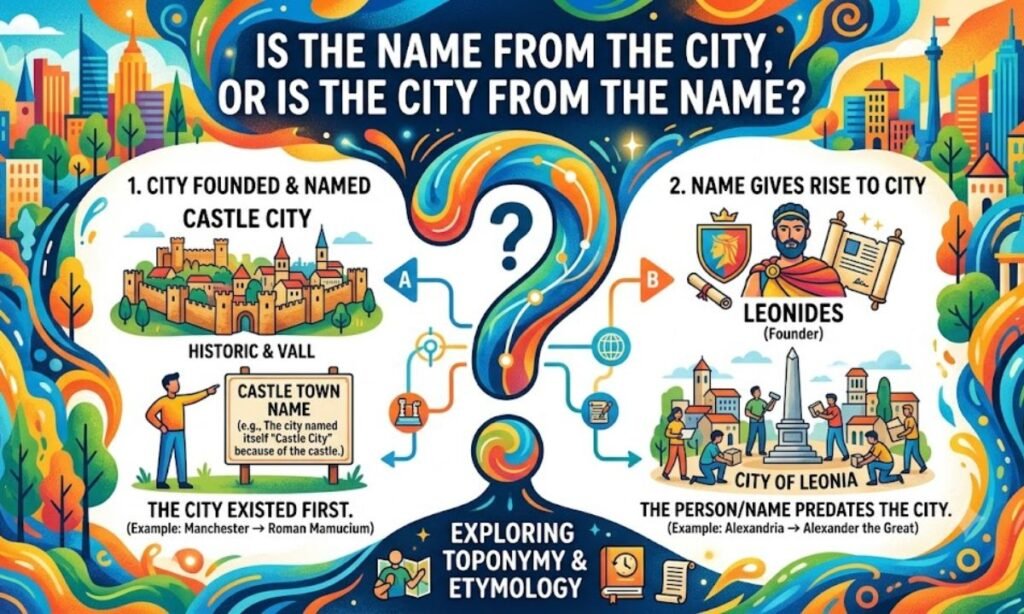
This is where people get mixed up, so let us clear it up properly. The Italian city of Florence, called Firenze in Italian, was actually named first, founded by the Romans around 59 BC as a settlement called Florentia. The city name and the personal name both come from that same Latin root, florens, meaning blooming. So they are cousins, not parent and child.
The personal name Florence did not come directly from the city. Both the city and the name grew from the same Latin word at roughly the same time in history. That said, once the city became famous for art, wealth, and the Renaissance, the name picked up extra shine just from the association. People hear Florence today and think of both the person and the place, and honestly, that double meaning only adds to the charm.
ALSO READ THIS:https://thetophexas.com/baby-names-that-mean-3/
Was Florence Nightingale really born in Florence?
Yes, she genuinely was, and this is one of the best true stories tied to the name. Florence Nightingale, the woman who built the foundations of nursing as we know it today, was born in the city of Florence, Italy, in 1820, while her wealthy British family was traveling through Europe. Her parents liked the city so much they named their daughter after it, which is actually where a big part of the name’s popularity in English speaking countries started.
Before Florence Nightingale, the name was fairly uncommon in Britain. After her fame grew, thanks to her work caring for wounded soldiers during the Crimean War, parents across England began naming daughters after her. That single person turned a quiet Latin name into a household name almost overnight. It is a good reminder that names carry stories, and sometimes one person’s life can change how an entire name is seen. Even today, mentioning the name Florence to an older relative often brings up her story first, before any of the newer famous Florences come to mind, which shows just how deep that connection still runs. It is a rare thing for one historical figure to shape a name’s popularity so directly, and it gives Florence a kind of built in legacy that few other names carry.
Is Florence a posh name?
In Britain, Florence often gets tagged as an upper class or old money sounding name, and there is some truth to that. Historically it was popular among aristocratic and well educated families, partly thanks to the Nightingale connection and partly because Latin based names carried a certain status. Old parish records from wealthy estates show the name showing up again and again, passed from grandmother to granddaughter, tucked into wills and family portraits.
That reputation has softened a lot in recent decades. Florence is now used across every background, in every part of the country, by parents who simply love how it sounds and what it means. It still carries a slightly elegant, timeless feel, similar to names like Beatrice or Margaret, but it no longer belongs to one social group. If anything, that mix of elegance and warmth is exactly why so many parents like it today. It reads as thoughtful rather than trendy, which is a different thing entirely, and that is usually the compliment parents are actually after.
How popular is Florence in the UK?
Florence has had a proper comeback. It dropped out of fashion through much of the twentieth century, sitting quietly in the background while shorter, trendier names took the spotlight. Then it started climbing again in the 2000s and has stayed inside the top 100 names for girls in England and Wales for several years running.
A few things fueled that comeback. The singer Florence Welch, of the band Florence and the Machine, brought fresh attention to the name for an entire generation. Vintage and classic names also came back into style around the same time, with parents choosing names their grandparents might have used over newer, invented sounding ones. Names like Alice, Rose, and Violet rose alongside Florence during that same stretch, all part of the same wave. Florence sits right in that sweet spot, familiar enough to feel warm, unusual enough to still feel special. It also travels well outside England, showing up in the top names lists of Wales, parts of Australia, and increasingly in the United States too.
Who are the famous Florences?
Real people carrying this name have shaped how it feels today, so here is a proper list, no repeats, each one bringing something different to the name.
- Florence Nightingale: the founder of professional nursing as a trained career, and still the name most people think of first
- Florence Welch: lead singer of Florence and the Machine, known for a bold, theatrical sound that pulled the name into pop culture again
- Florence Griffith Joyner: Olympic sprinter, nicknamed Flo Jo, still holds the world records she set decades ago
- Florence Pugh: British actress known for major film roles, part of the reason the name feels current for younger parents
- Florence Foster Jenkins: American singer known for her unusual voice and her wildly devoted fans, later the subject of a major film
- Florence Balcombe: wife of author Bram Stoker, a well known figure in Victorian literary circles
- Florence Harding: First Lady of the United States, known for actively supporting her husband’s political career
- Florence Farmer: early British trade unionist and activist who pushed for better working conditions
- Florence Kelley: American social reformer who fought against child labor
- Florence Sabin: pioneering American scientist and anatomist, one of the first women elected to the National Academy of Sciences
- Florence Mills: American singer and dancer of the Harlem Renaissance, celebrated across both America and Europe
- Florence Ballard: founding member of The Supremes, part of one of the most influential vocal groups in music history
- Florence Baker: nineteenth century explorer who traveled through Africa mapping the source of the Nile
- Florence Bascom: first woman hired by the United States Geological Survey, a trailblazer in geology
- Florence Griswold: American art patron whose home became a gathering place for painters
- Florence Chadwick: long distance swimmer, the first woman to swim the English Channel in both directions
- Florence Eiseman: American children’s clothing designer whose work is still studied in fashion history
- Florence Joyner Kersee: track and field coach and Olympian, closely tied to the Griffith Joyner family legacy
That list spans nursing, science, sport, music, film, and activism. Not many names can claim that kind of range, and it shows how flexible the name really is. A child named Florence today is stepping into a name with a long line of women who did genuinely remarkable things, which is a nice bit of quiet inspiration built right into the name itself.
What about nicknames?
If the full name feels a little formal for everyday use, there are plenty of shorter versions that soften it right up.
- Flo
- Florrie
- Flossie
- Floss
- Florie
- Florry
- Flor
- Ren (used occasionally as a playful shortened form from the middle sound)
- Floren
- Florentine (as a nickname rather than full name in some families)
- Fifi (used affectionately in some British families)
- Fen (a rarer, softer shortening)
Flo and Florrie are by far the most common, especially in the UK. Some families use the nickname every single day and save the full name Florence for school registers and birth certificates only. It is a nice bit of flexibility, a formal option for official life and a warm, everyday version for home.
How do you say Florence?
In English, it is said as FLOR-uhns, with the stress on the first part of the name. It is a straightforward name to say once you hear it, though plenty of people pause the first time they see it written down.
In Italian, the city name Firenze is pronounced quite differently, closer to fee-REN-zeh, which trips people up when they assume the two are said the same way. The personal name Florence, even in Italy, is usually still said closer to the English version or the Italian Fiorenza, not Firenze. So remember, the city and the name may share roots, but they do not always share a pronunciation.
If you are teaching a young child to say their own name, breaking it into three simple parts helps, FLOR, then guns, said quickly together. Grandparents and older relatives sometimes pronounce it with a slightly stronger emphasis on the middle syllable, a small regional habit that varies from family to family and is worth asking about if you want to match a particular relative’s version. None of these small variations are wrong, they are just part of how a name settles differently into different households.
Does Florence work in other languages?
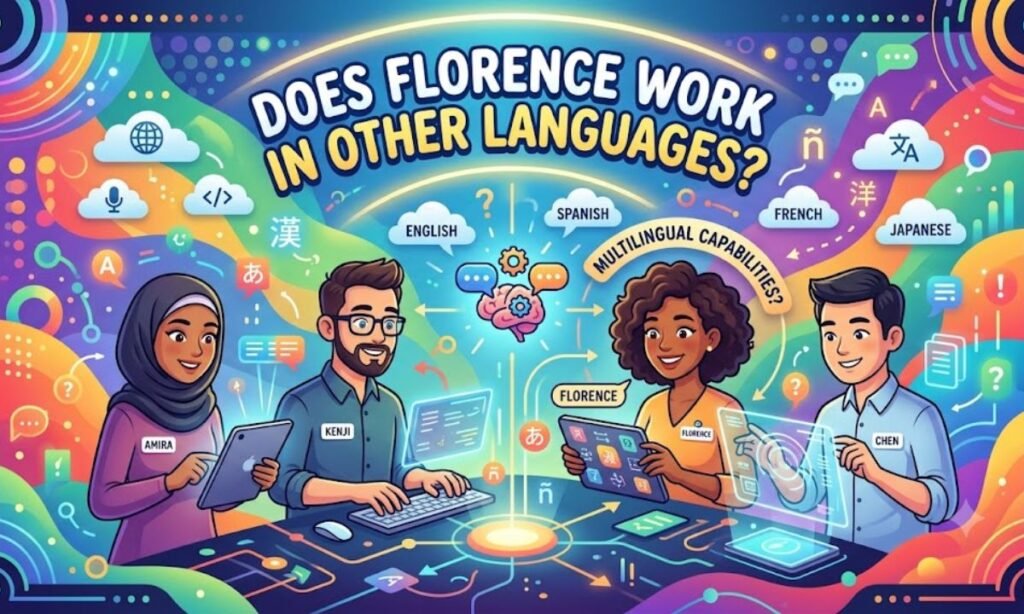
Yes, and this is one of the more interesting parts of the name’s story, because almost every European language has its own version.
- Fiorenza: Italian
- Florencia: Spanish
- Florence: French, spelled the same but said with a soft final syllable
- Florentyna: Polish
- Florentina: German and several Eastern European languages
- Florentia: Latin, the original root form
- Florens: Swedish and Dutch
- Florenza: used in parts of Italy as an alternate spelling
- Florijana: Croatian and Slovenian
- Florentine: Dutch and German, also used as a standalone name
- Florinda: Portuguese and Spanish, a related variant
- Florenne: a rarer French regional variant
That range means the name travels well. A family with roots in more than one country can usually find a version of Florence that fits their own language and still keeps that same blooming meaning at its core. Some parents raising bilingual children choose one spelling for official documents and use a softer local version at home, which lets the child grow up with a name that feels natural in both languages rather than translated on the spot. It is worth checking how each version sounds with your own surname too, since a name that flows beautifully in Italian might sit awkwardly next to a very different sounding last name, and the reverse is just as true.
Tips for choosing and personalizing Florence
Picking a name is not just about the meaning, it is about how it fits real life, so here are a few practical things worth thinking through.
- Say the full name out loud with the surname. Some surnames clash with the extra syllables in Florence, so test it before you commit.
- Decide on the nickname early. If you want your child called Flo day to day, make sure everyone in the family is on board, since nicknames stick fast once they start.
- Think about middle names. Florence pairs nicely with shorter, one or two syllable middle names, since the first name already carries some length.
- Consider the family connection. If there is a Florence somewhere in your family tree, this can be a lovely way to carry that history forward without using the exact same spelling.
- Test it on paper and in speech. A name can look great written down but feel clunky said aloud, or the other way round, so try both.
A little planning here goes a long way, and it means the name still feels right ten or twenty years down the line, not just on the day it is chosen.
How to test the name before you commit
Choosing a name is a big decision, so it deserves a proper test run, not just a gut feeling on day one.
- Write it on an envelope. Seeing Florence written out as a full formal name, the kind that would go on an invitation or a school certificate, tells you a lot about how it will feel long term.
- Shout it across a room. Names get shouted a lot, at school pickup, at the park, across a garden, so make sure it holds up at volume and does not feel awkward to call out.
- Picture it at every age. A name that suits a baby does not always suit a teenager or an adult in a job interview, so picture Florence at six, sixteen, and sixty.
- Ask a few trusted people. Not for permission, just for reaction, since a fresh set of ears sometimes catches something you have gotten too close to notice.
- Check the initials. Pair Florence with your middle and last name choices and check the initials do not spell out anything unfortunate.
None of these steps take long, but together they save a lot of second guessing later.
Building an identity around the name
Once a name is chosen, especially for a child, families often build small traditions and touches around it, and Florence lends itself well to this. Floral themes work naturally, given the meaning, so nurseries, birthday parties, and even baby announcements often lean into flowers, blossoms, and spring colors without it feeling forced. Some families use the meaning itself as a starting point for a middle name or a family motto, something quiet that only the family understands but that carries real weight. Others lean into the famous bearers, naming a child Florence and later sharing the story of Florence Nightingale or Florence Griffith Joyner as the child grows, giving them a role model attached to their own name. That kind of identity building does not need to be elaborate, sometimes it is as simple as a small keepsake, a book, or a yearly tradition tied to the meaning of blooming and flourishing.
So, is Florence a good name?
Honestly, yes, and it earns that yes for good reasons. It has real history behind it, a meaning that actually stands for something good, a long list of famous and respected people who carried it, and enough flexibility through nicknames and international versions to suit almost any family.
It works for a formal setting and softens easily for everyday life through Flo or Florrie. It is not overused, but it is not so rare that people will constantly ask how to spell it. If you want a name with roots, warmth, and a bit of quiet elegance, Florence checks every box, and it has been proving that for close to two thousand years. It ages well too, which matters more than people often realize when naming a baby, since the same name has to work on a school report, a job application, and eventually a grandmother’s birthday card, decades apart from each other.
So next time you hear the name Florence, you will know exactly what is behind it, from the Latin fields it bloomed from to the nurse, the singer, and the sprinter who made it their own. It is a name with real weight and real warmth in equal measure, which is a rare combination to find. Whether you are naming a daughter, researching your family tree, or just satisfying your own curiosity, Florence turns out to be a name worth knowing properly, not just recognizing in passing.